🗣️ Listen to this short post and full excerpt, narrated by the author (23 min):
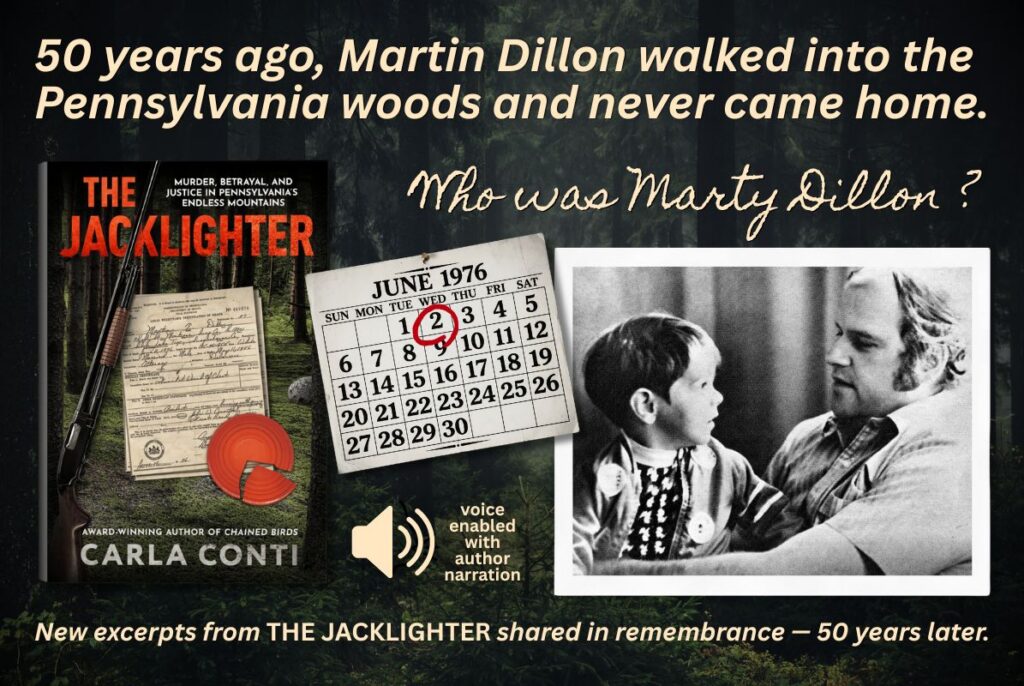
New excerpts from THE JACKLIGHTER mark 50 years since a Pennsylvania attorney was murdered in the woods.
In a perfect world, The Jacklighter would have been published on June 2, 2026, exactly 50 years to the day that Martin Dillon walked into the Pennsylvania woods and never came home. The book isn’t quite ready, but it is coming this fall, and this date was too significant to let pass quietly.
I teach a true crime writing workshop, and one of the things I argue most strongly is this: write about your victims with dignity. Learn everything you can about who they were in life: their relationships, their humor, their contradictions. Resist the urge to flatten them into martyrs.
The Jacklighter is the story of Marty Dillon, a 30-year-old small-town lawyer in Montrose, Pennsylvania, who was shot and killed by someone he trusted. It’s also the story of what happened next: the investigation, the cover-up, and the long road to justice in Pennsylvania’s Endless Mountains. Plus, my story contains a revelation never before made public—a secret I uncovered that could have changed everything, and the reason it was never told.
What follows are two new narratives from the manuscript. The first is an excerpt from Chapter 1. The second is a complete chapter covering the final weeks of Marty’s life. Together, I hope they answer the question: Who was Marty Dillon?
✦ Excerpt from The Jacklighter ✦
Chapter 1: DILLON FOR DA
Chapter Excerpt
Wednesday, June 2, 1976
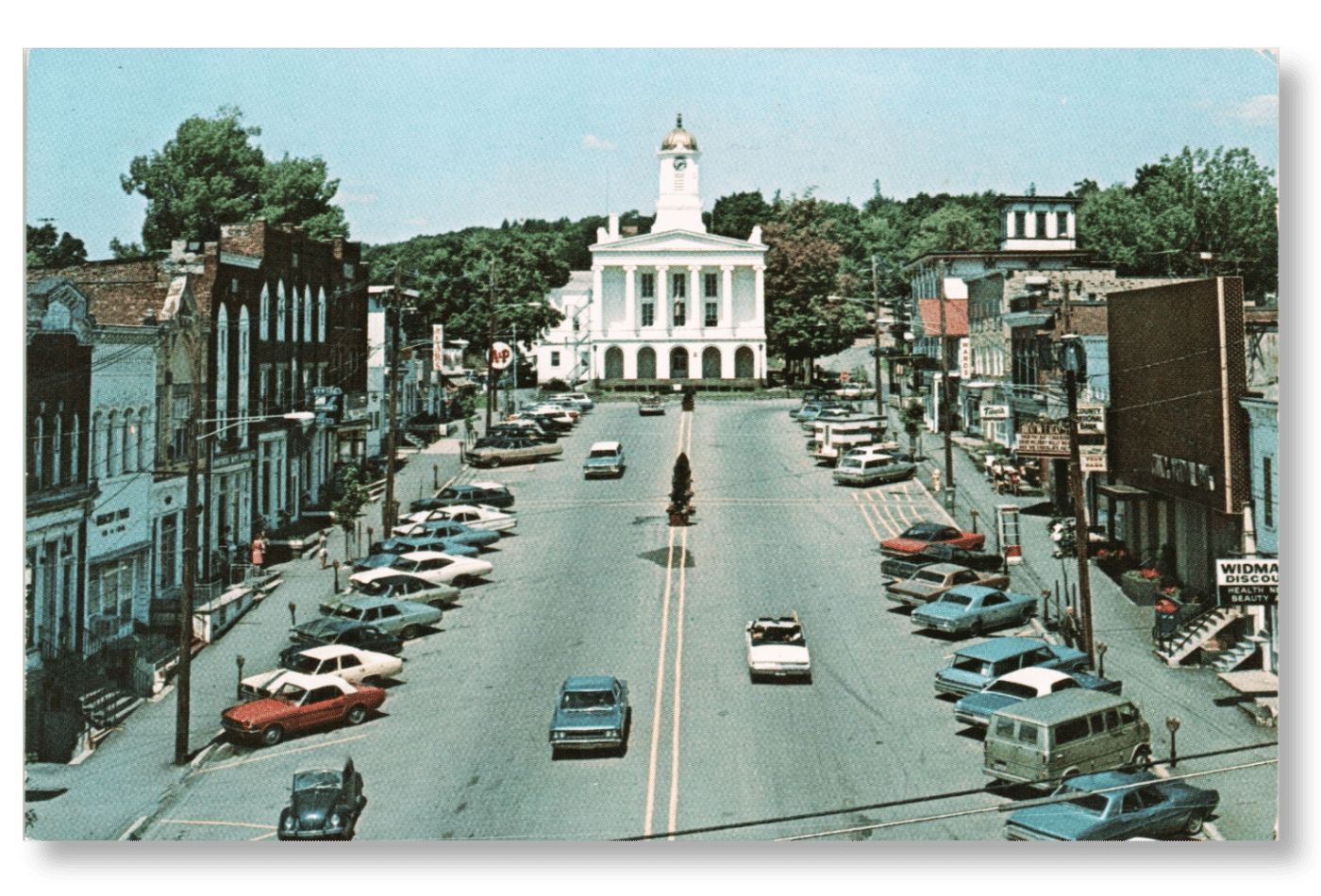
June 2, 1976, was a picture-perfect late spring day in Montrose, Pennsylvania, and about as pretty as it gets in this cozy hamlet in the northeast corner of the state. Sunshine, shady trees, and shoppers milling around storefronts on Public Avenue, hopscotching over cracked sidewalks, uphill or downhill, depending on their business.
The bottom of the hill featured the town’s single stoplight—a bizarre, almost comical relic of early traffic engineering. By design or long neglect, it operated with only three light bulbs arranged in a four-way configuration that defied the norm. From two directions, the lights ran top to bottom as expected: red, yellow, green. But from the other two sides, the sequence reversed: green, yellow, red. Locals were used to this charming oddity. But for the inattentive or the color-blind, it was a quiet hazard when the bottom light, ordinarily green everywhere else in America, was sometimes red in this sleepy one-stoplight town.
At the top of the hill, an imposing white-painted brick courthouse with columns and a gold-domed clock tower stood sentinel at the head of Public Avenue. Montrose was the Susquehanna County seat and had been since 1812, when the county was carved from the wilderness, and the town was laid out on a New England-style grid. From the mid-to-late 1700s, both Connecticut and Pennsylvania claimed the region, and settlers from both states fought over it until 1799. Even though Pennsylvania won the Pennamite-Yankee Wars conflict, everything about the town’s layout—its wide central avenue, orderly lots, and spare Federal-style architecture—carried the DNA of New England.
Across the road from the courthouse stood another New England transplant: the Town Green, a historic grassy site with a gazebo, war cannons and memorials, and benches beneath leafy sugar maples and oaks. The 10-acre Green was a central “commons” and event grounds and had become the heart of the town’s Fourth of July celebration. The Bicentennial, with its parade, food, music, and festivities, was only a month away and would spill out from the Town Green onto the street and fractured walkways.
And just steps from those two landmarks, nearest the top of Public Avenue, were the professional offices that kept the county government and legal engines humming.
Among these street-facing businesses was the law office of Robert G. Dean, a longtime legal patriarch, and his young associate, Martin T. Dillon. Marty, born and raised in Montrose, had come back to his hometown after Villanova Law School and convinced Bob Dean to add his name in gold lettering to the storefront window. That had been five years ago, in 1971, when Marty returned to Montrose with his pretty wife, Patti, who had also grown up in the quaint Victorian town. They moved back when their son was an infant, and they had a daughter two years later. Patti renamed herself Pat and, as a registered nurse, started working two days a week at the Montrose Hospital, while her mother watched first one grandchild, and then two.
In those five years as Bob Dean’s associate, Marty had become a trusted law partner, handling mostly property transactions, divorce cases, and representing banks that needed to foreclose or collect debts. But he was just now stepping into criminal defense with his very first murder trial coming up in a few days. In February, Marty had been appointed as a public defender for a man accused of beating another man to death, and the evidence against his client was overwhelming. Murder trials in Montrose were rare, and people stopped him in the street to talk about it.
Marty, affable and always ready with a joke, had just turned 30, although his thinning hair made him look older. Knowing he was sensitive about the hair loss, a good friend joked that it would probably help him win over some older voters when he ran for district attorney. Marty was a shoo-in for the spot: He’d been a rising star since high school and gave back to the community, sometimes representing down-on-their-luck clients for free. He served as the current Lions Club president, and it didn’t hurt that his father, Larry Dillon, was the town mayor—bumper stickers that said “Dillon for DA” had already been printed.
__________
June 2nd was a Wednesday, which meant many town professionals closed up shop early for golf or other manly pursuits. One of these extracurriculars was the sport of shooting clay pigeons, which defined the Wednesday Afternoon Club. Marty was this club’s president too, presiding over a group of friends who enjoyed skeet shooting at Marty’s family hunting camp, Gunsmoke. Membership included a local banker, the town’s newspaper publisher, two hospital personnel, and a doctor. Twice a month, they all tried to clear their desks by 3 p.m. to meet up at Gunsmoke, 12 miles outside of town, to trap shoot, drink beer, and grill up a picnic-style supper.
It was Marty’s mom, Jo Dillon (short for Josephine), who affectionately named the camp Gunsmoke after the popular TV western series because the show’s hero, U.S. Marshal Matt Dillon, shared the family’s last name.
The weather was perfect for skeet shooting, but for various reasons, most of the regulars had dropped out that day. One by one, each had left messages with Marty’s secretary saying they couldn’t go. Only one had a good excuse—it was his wife’s birthday, and he was taking her to dinner.
On his way to the bank for a client’s property closing, Marty ran into two state police troopers who were off duty and wanted to chat about next Monday’s murder trial. Marty told them, frankly, that it would be an uphill battle for the defense, as a witness claimed his client had been the one who beat the victim to death.
Outside the County Bank, Marty saw his client-turned-good friend, Kendall Strawn. Kendall wasn’t an official member of the Wednesday Afternoon Club, but he’d been out at Gunsmoke shooting skeet plenty of times, so Marty extended a last-minute invitation.
“Come on, it’ll be fun,” Marty said. “Just a couple of hours … I’m going to try out the Ithaca.” Kendall had loaned Marty his 12-gauge double-barreled Ithaca shotgun because Marty was thinking of buying one.
But Kendall was a busy real estate broker with a young family and a farm, and was swamped with work. “I wish I could,” he told Marty. “But I have another closing to get to. I’ll have to pass.”
Kendall felt bad about turning down the invitation after learning about the other no-shows, and then he really regretted his busy day when he understood who the only other skeet shooter would be.
Just before 3 p.m., Marty returned to his office to pack up for the day. He opened one last letter on his desk—it was from his insurance company, confirming a change he’d just made to his life insurance policy. Then he called his wife, Pat, to say he’d be going out to Gunsmoke and would have dinner there. Most of the other guys couldn’t make it, he told her. It would just be him and Steve.
__________
Chapter 4: THE FINAL LAP
May 1976
In the month preceding Marty Dillon’s death, the promising and genial small-town lawyer seemed to be getting his house in order.
In a month of ups and downs, when he was both humiliated and celebrated, he was finally taking a stand on his wife’s long-time affair with their doctor friend. Marty had given Pat a choice: either exit the marriage and go off to New Mexico with Dr. Steve Scher, or stay with him and keep their family intact.
As anathema as the prospect of divorce was to the staunchly Catholic couple, Marty was prepared to file the paperwork (he did that for a living) and retain custody of Michael, age 5, and Suzanne, almost 3. Pat could have her doctor, but she would not keep the children.
Saturday, May 15—2 Weeks Before the Murder
Marty Dillon and Steve Scher were almost birthday twins. Marty marked his 30th birthday on Tuesday, May 11th, while Steve Scher turned 36 the day before.
On Saturday, May 15th, after the birthdays had come and gone, Marty’s best friend since college, Kerry Graham, drove up to Montrose from Philadelphia for the weekend. Kerry got himself “invited” to shoot clay pigeons at Gunsmoke that afternoon, but that was a ruse to keep his friend out of the house while Pat prepared a surprise birthday party for her husband.
Kerry and Marty shot several rounds and returned to the trailer for beer and snacks, when the conversation took a dark turn. Marty confessed his marriage was in trouble. Choking back tears, Marty told his college friend that he and Pat weren’t having sex, and in fact hadn’t had sex for months. Kerry was stunned and heartbroken for his friend, so clearly distraught, and he thought about how deceiving appearances could be—every time Kerry saw Pat and Marty together, they seemed like a happy couple.
Marty didn’t mention Pat’s affair, and Kerry, who lived almost four hours away, was unaware of the town gossip. That Marty was so unhappy with a crumbling marriage was terrible, unwelcome news to Kerry.
__________
But none of that was news to another good friend of Marty’s, Kendall Strawn. Kendall, 33, was the Realtor who lived with his wife and newly adopted baby girl on a farm 30 minutes west of Montrose. He was initially Marty’s client, but the pair became fast friends, especially over their shared love of auto racing. The two men eventually bought a BMW race car together and paid a professional driver to compete in races. Kendall and Marty would often take off on weekends to watch the driver perform in their co-owned car, which sometimes earned them trophies, but never any money.
Even before the rumors about Pat and Steve circulated, Kendall had long been suspicious of the doctor and nurse. The first hint came more than a year ago, when Marty told Kendall that Pat would be going to a medical conference in Canada with Dr. Scher. It didn’t seem to bother Marty at the time, and so Kendall didn’t voice any concerns. Then Kendall and his wife got to know Pat and Dr. Scher more intimately, as the doctor and nurse were instrumental in helping them adopt their baby daughter. The meetings with the four adults gave the Strawns a true glimpse into the doctor-nurse dynamic. The way Pat and Steve looked at each other, their incidental touching, and mutual attraction—it was more than unnerving to the Strawns.
Last winter, Pat phoned Kendall to urge him to take Marty on a race-car watching vacation to Tampa, Florida. It didn’t take much persuading, and on the morning of their departure, Kendall found Dr. Scher at the Dillon home making a house call for Pat’s sore back. After the men loaded their luggage and pulled out of the driveway, Kendall asked his friend if he didn’t find it suspicious that the doctor was there with Pat just as he was about to leave town. Marty did not reply.
But as winter melted into spring and rumors of the affair reached a crescendo among townfolks, Marty confided to Kendall. The lawyer told his friend what Kendall and many in Montrose already knew: that Pat had been unfaithful with Steve and the marriage was probably over.
However, Marty made one last attempt to either save his marriage or end it with certainty by giving Pat an ultimatum. He told Kendall his plan to make Pat choose, and Kendall was sympathetic and supportive. Kendall thought his friend had been egregiously humiliated for more than a year, and that Marty’s stance was well overdue.
__________
While Marty was skeet shooting with Kerry Graham at Gunsmoke, Pat, her sister-in-law, and other volunteers hung balloons and streamers in the Dillons’ basement rec room at 7 Kelly Street. Pat ushered 30-40 friends and family downstairs to yell “Surprise!” when Kerry brought Marty back, and Marty truly was surprised and touched by his wife’s effort.
Steve Scher was one of the guests who mingled in the rec room, decorated with an old phone booth salvaged from a local hamburger stand. Steve had helped Marty hang most of the basement’s drywall, back when the doctor yearned for friendships with other professionals, and well before he’d begun sleeping with Marty’s wife.
Steve, too, had had a birthday that week, but no one had thrown him a party. And even if they had, the number of good friends on his guest list could have fit into that phone booth.
When everyone was asked to quiet down because the birthday boy had something to say, Steve became transfixed on his rival. Kendall was watching from across the room, and he saw a look of pure hatred cross the doctor’s face. As Marty, with Pat by his side, raised a glass and thanked everyone for coming, Kendall couldn’t get over Steve’s reaction …. if looks could kill.
__________
Kendall never learned the outcome of the ultimatum. He wondered what Pat would do. Really, the choice would come down to her children versus Steve, because Marty would never let her leave the county with Michael and Suzanne.
A week after his birthday party, Marty made a change to his $50,000 life insurance policy. He removed Pat as the beneficiary and replaced her with his two children.
Memorial Day Weekend—3 Days Before the Murder
Since its inception in 1911, the Indianapolis 500 had been held on May 30, the holiday then known as Decoration Day. By 1976, the race had moved to its permanent home on the Sunday of Memorial Day weekend—a date motorsports lovers simply called “Race Day.”
And to celebrate, Marty traveled with his usual band of race car enthusiasts from Montrose to Connecticut for a TV screening and a big house gathering with very close friends. The tailgaters included his parents, Larry and Jo Dillon, and their best friends, Ken and Mary Lee Caterson. And this time, Marty brought along five-year-old Michael. They were all headed to Avon, Connecticut, where Ken and Mary Lee’s son, Bob Caterson, lived. Bob had grown up with Marty, and he and his wife, Sue, were good friends of the younger Dillons before Bob and Sue moved. The younger Catersons had left Montrose a couple of years before for Bob’s work and were now 228 miles east of their hometown.
Since moving, Bob and Sue had hosted the motley crew a few times each year during racing season. The elder Dillons always brought along their camper for overflow sleeping, and because of Marty’s bad back (he’d had a spinal fusion surgery in 1969), he always slept on the floor. Sue loved cooking big Sunday meals for the appreciative crowd, and there was always plenty of help in the kitchen, not to mention extra hands for Sue’s newest baby boy. The Dillons and Catersons were like family.
Marty never brought Pat to Connecticut, though. Years earlier, Pat had joined Marty, Bob, and Sue at the Watkins Glen, NY, summer car races and had stayed in the unair-conditioned camper. Between the humidity and no-frills picnicking in the rocky, barren grounds, Pat was out—and also, she didn’t even like racing. “Most women didn’t,” Bob acknowledged.
Bob was just as much of a motorsports fan as Marty, and each of the young men picked up the obsession from their fathers as boys. In 1958, Ken bought a Jaguar race car, which got Larry interested, and the rest was history.
Marty loved everything about race cars, Bob said. “The sounds, the sights, the excitement … it was the human being and machine working together for a common goal.”
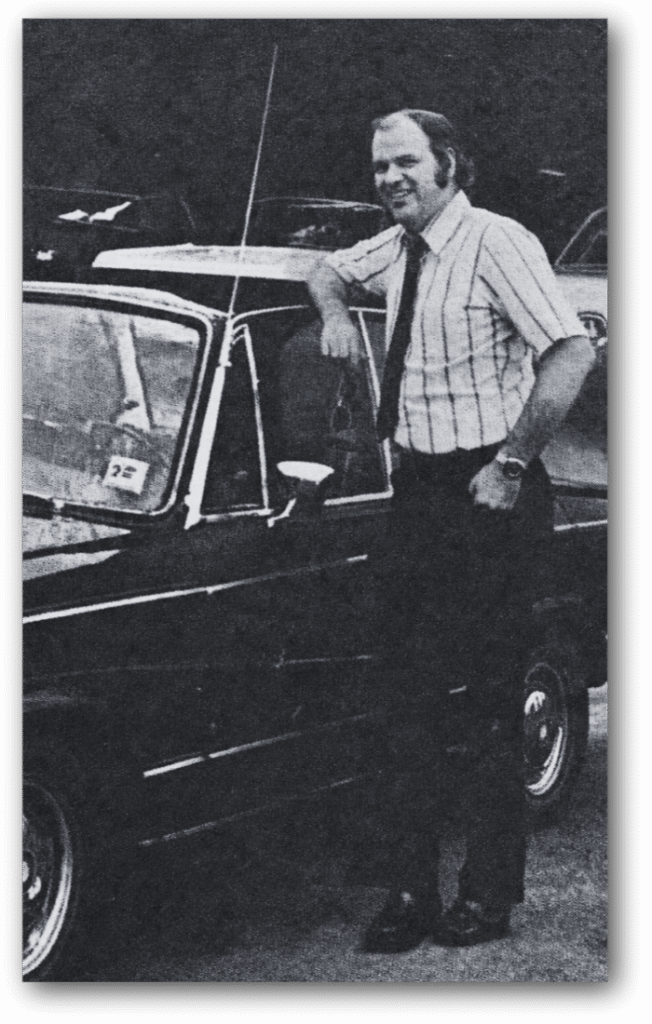
Marty also cherished his mid-1970s, maroon, two-door BMW 2002tii, a sports sedan with 130 horsepower. On whatever country roads he could get away with, Marty would take Bob on some “hair-raising” wild rides. With the gas pedal to the floor and in third gear, they’d sometimes reach 100 mph. Marty would shift into fourth, look at Bob, and say, “Isn’t this a great car?” as Bob, white-knuckled, held on for dear life.
__________
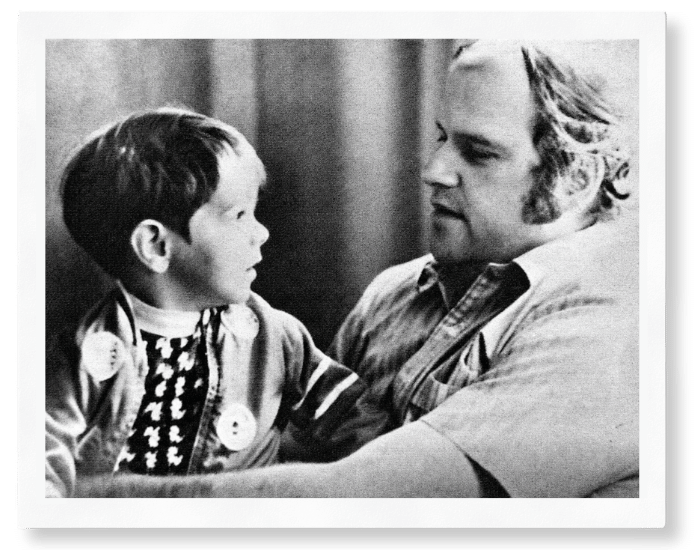
On Sunday night, May 30th, ABC broadcast a tape-delayed replay of the race for TV viewers, and Sue Caterson’s living room was packed. Five-year-old Michael, who was already showing signs of adopting the Dillon men’s love of car racing, sat on his father’s lap.
The pre-race coverage included a “Month in Review” segment, which featured a spectacular rollover crash from two weeks earlier—a harrowing scene for viewers, and especially a very impressionable five-year-old boy.
During practice laps on May 11th, driver Eddie Miller of Lakewood, Colorado, lost control of his #46 Thermo King Eagle coming out of Turn 1. The car slid into the infield grass, veered into a ditch, and then launched into a series of violent flips before landing upside down near the bleachers. While waiting to be extricated, Miller was trapped upside‑down in the cockpit, soaked in methanol, and any ignition source nearby could have been catastrophic. Miraculously, he was rescued before any fire could start, and he escaped with just two fractured neck vertebrae and no paralysis. But the injuries effectively ended his racing career.
Young Michael watched the dramatic replay of the violent, high-speed wreck with wide eyes, and he suddenly had questions about car crashes and death.
Staring up at his father, the five-year-old asked, “Dad, what happens when people die? Does everybody just forget about them?”
Marty chose his words carefully. Rather than downplay his son’s question or sugarcoat an answer, he said, “The sad truth is, Michael, that’s exactly what does happen sometimes.”
__________
When the weekend was over, and little Michael hugged everyone goodbye, Marty, Sue, and Bob made plans to meet up at the races in Watkins Glen in July.
But Watkins Glen would never happen. Three days later, Marty took Dr. Steve Scher skeet shooting at Gunsmoke and didn’t come home.
© 2026 Carla Conti / Crimemoir Press. All rights reserved. These excerpts from The Jacklighter: Murder, Betrayal, and Justice in Pennsylvania’s Endless Mountains may not be reproduced without written permission.
The Jacklighter eBook can be pre-ordered on the author’s Crimemoir Store ahead of its Fall 2026 release date. Pre-orders of the eBook and other formats are coming to Amazon and other platforms later this year.